
Written by M. P. Shanavas, Chief Consultant, Brand Consulting Corporation (bccqa.com)
Web Summit Qatar 2026 marked more than the conclusion of a major global technology event. For founders, investors, and ecosystem builders paying close attention, it represented a clear inflection point in how Qatar now positions—and operates itself—within the global startup landscape.
Qatar is no longer orienting itself towards the startup world. It is functioning as a structured startup ecosystem, with policy, regulation, funding mechanisms, and long-term incentives moving in visible alignment.
What became evident in Doha went well beyond keynote sessions or panel discussions. The deeper signal lay in the way multiple institutions, programs, and frameworks converged around a shared objective: enabling technology companies to establish, operate, and scale with clarity and confidence.
These signals matter. They point to an ecosystem built not merely to attract startups, but to support their long-term growth and continuity.
For founders navigating post–Web Summit decisions, this distinction is critical. It reframes Qatar not as a temporary market-entry option, but as a viable long-term base—one that integrates company formation, capital access, residency pathways, and ecosystem participation into a coherent whole.
This article examines what truly unfolded during and after Web Summit Qatar 2026, why founder interest in Qatar accelerated immediately following the event, and how the country’s broader, multi-layered ecosystem—rather than any single authority—is enabling technology startups to build, fund, and scale with strategic intent.
Why Web Summit Qatar 2026 Was a Defining Moment for Qatar’s Startup Ecosystem
In previous years, many countries used global technology events primarily for branding and visibility. Web Summit Qatar 2026 demonstrated something different: Qatar used the summit as an activation platform for its startup ecosystem.
What stood out most to founders was not only access to investors, but how structured and coordinated the ecosystem felt—from regulation and funding to residency and long-term presence.
Why Global Startups Are Increasingly Choosing Qatar
Founders exploring Qatar after Web Summit consistently cited the following factors:
- A highly organized, government-backed ecosystem
- Multiple, clearly defined startup support institutions (not a single gatekeeper)
- Startup-friendly tax incentives and rebates
- Simplified company registration and licensing pathways
- Flexible visa processes
- Long-term residency options (up to 10 years) for founders and executives
- Strong alignment between regulators, incubators, and investors
Together, these elements position Qatar not just as a place to incorporate, but as a stable base for long-term growth and capital access.
Web Summit Qatar 2026 in Numbers — Why This Edition Changed the Game
The scale of Web Summit Qatar 2026 provides important context for the momentum that followed.
Record-Breaking Participation and Global Reach
- 30,274 attendees from 127 countries
- 1,637 startups and 931 investors
- 38% women-founded startups
This level of participation confirms Web Summit Qatar’s position as the largest technology event in the Middle East.
Funding Momentum Linked to the Summit
Post-event figures showed measurable outcomes:
- Over 70 startups from the Qatar Startup Programme raised USD 205 million
- AI & Machine Learning: USD 125 million
- Data & Analytics: USD 41 million
- Fintech & Financial Services: USD 26 million
These numbers matter because they demonstrate that the summit connects founders to real funding pathways, not just visibility or networking.
Beyond Individual Startups — Understanding the USD 28 Billion+ Funding Impact
Another headline figure referenced after Web Summit Qatar 2026 was that total funding activity linked to participating companies exceeded USD 28 billion over the past year.
This figure reflects the broader ecosystem impact, including startups, speakers, partners, and enterprises whose funding, investment, or expansion activity accelerated through Web Summit–connected networks.
Web Summit organizers frequently cite that companies which have participated in previous Web Summit editions have gone on to raise more than USD 463 billion in total lifetime funding.
This is not a single-year claim. It is an ecosystem performance indicator, commonly referenced by regulators and investors to assess whether a platform consistently connects founders with long-term capital opportunities.
Why Qatar Emerged as a Serious Global Startup Launchpad
One of the most defining moments of Web Summit Qatar 2026 came during the opening ceremony.
The Prime Minister and Minister of Foreign Affairs announced an expansion of the Qatar Investment Authority’s Fund of Funds, reinforcing Qatar’s long-term commitment to global venture capital.
What the Fund of Funds Expansion Signals
- An initial USD 1 billion program had already anchored 12 international VC funds in Doha
- An additional USD 2 billion expansion was announced during Web Summit Qatar 2026
This announcement sent a clear signal: Qatar is not experimenting—it is committing capital for the long term.
Understanding Qatar’s Startup Ecosystem — Not Just One Authority
Founder confidence increased significantly after Web Summit as clarity emerged around how Qatar’s ecosystem actually works.
Qatar’s startup environment is multi-layered and coordinated, involving institutions such as:
- Qatar Financial Centre (QFC) – international business framework and licensing
- Qatar Development Bank (QDB) – funding, incubation, and acceleration
- Qatar Research, Development and Innovation Council (QRDI) – national innovation strategy
- Qatar Science & Technology Park (QSTP) – deep tech, R&D, and enterprise integration
- National incubators, accelerators, and sector-specific hubs
Why Coordination Matters More Than Incentives
Founders consistently value clarity, predictability, and coordination over short-term incentives. Qatar’s advantage lies in how funding, regulation, incubation, and residency pathways are aligned into one coherent system.
Startup Qatar, QDB, and Real Funding Pathways
One of the most practical outcomes discussed after Web Summit Qatar 2026 was access to structured funding programs, particularly through Startup Qatar initiatives powered by QDB.
Examples include:
- Seed-stage funding support
- Growth-stage funding pathways
- Startup Qatar Investment Program offering:
- Up to USD 1.1M for early-stage startups
- Up to USD 5.5M for scaling companies
- AI compute credits supporting AI-driven startups
- Subsidized co-working, talent access, and R&D grants
These programs matter because they provide execution capital, not just endorsements or introductions.
Beyond Company Setup — Residency, Stability, and Long-Term Presence
A notable shift in founder thinking after Web Summit Qatar 2026 was moving from:
“Where do I register?” → “Where can I live, operate, and build long-term?”
Entrepreneur and executive residency pathways (including Jusour-linked programs) enable founders to:
- Secure long-term residency
- Relocate families
- Access banking and lifestyle stability
- Demonstrate long-term commitment to investors
This long-term presence significantly strengthens investor confidence and founder credibility.
Common Mistakes Founders Make After Web Summit Qatar
Despite strong momentum, certain mistakes appear repeatedly.
Rushing Company Setup Without Strategic Positioning
Registering quickly without aligning structure, funding readiness, and ecosystem fit often leads to delays and restructuring later.
Treating Licensing as the End Goal
Investors look beyond incorporation certificates to assess governance, compliance, and long-term intent.
Why Founders Need a Bridge — Not Just a Service Provider
Web Summit Qatar creates momentum. The challenge is converting that momentum into structured execution.
This perspective comes from operating within the ecosystem, not observing it from outside.
Many founders experience:
- Too many choices
- Limited local context
- Momentum loss within 3–6 months after major events
A bridge approach connects:
Summit insight → ecosystem navigation → structure → funding → growth
This approach is best informed by founders who have already operated within the ecosystem under real programs.
Who This Matters Most To
- Founders who attended Web Summit Qatar 2026
- International startups evaluating Middle East expansion
- Investors assessing founder seriousness through jurisdiction and structure
Practical Next Steps for Founders Exploring Qatar
Before taking action, founders should ask:
- Is my structure investor-ready?
- Does my jurisdiction support funding velocity—meaning faster investor diligence, clearer compliance, and fewer regulatory delays during fundraising and deployment?
- Do I understand the ecosystem beyond registration?
For founders continuing this journey, clarity and sequencing matter more than speed.
🔗https://bccqa.com/bridge
📲https://wa.me/97466824638
Frequently Asked Questions (Web Summit Qatar 2026 & the Qatar Startup Ecosystem)
Q: What did Web Summit Qatar 2026 really achieve for startups?
Web Summit Qatar 2026 moved beyond visibility and branding to deliver measurable outcomes. More than 70 startups from the Qatar Startup Programme collectively raised over USD 205 million, while overall funding activity connected to participating companies exceeded USD 28 billion over the past year.
Equally important was the structural signal it sent: Qatar demonstrated that its startup ecosystem is not aspirational, but operational—linking capital access, regulatory clarity, and long-term presence into a cohesive framework.
Q: How is Web Summit Qatar different from other global tech conferences?
Many global tech conferences focus primarily on exposure, networking, or media attention. Web Summit Qatar 2026 functioned as an activation platform, where policy announcements, funding mechanisms, and regulatory pathways were aligned and communicated in real time.
For founders, this meant leaving the event not just with contacts, but with clarity about next steps—where to incorporate, how funding flows, and what institutional support is available.
Q: Is Qatar a good place to start or scale a technology company in 2026?
Yes—particularly for founders seeking a stable, long-term base rather than a short-term market entry. Qatar offers a combination of:
- A regulated international business environment
- Access to regionally and globally connected investors
- Government-backed funding and acceleration programs
- Long-term residency pathways for founders and executives
This combination is especially relevant for technology startups that value jurisdictional credibility, governance clarity, and investor confidence.
Q: Why are many founders choosing the Qatar Financial Centre (QFC) after Web Summit Qatar 2026?
Following Web Summit Qatar 2026, applications under QFC reportedly increased significantly, driven by founders seeking:
An international legal framework compatible with global investors
• 100% foreign ownership
• Transparent corporate governance standards
• Alignment with venture capital and institutional funding requirements
In addition to these structural advantages, Web Summit Qatar featured a dedicated, event-exclusive QFC startup offer, which further accelerated founder interest. The offer included zero registration fees, waived annual fees for three years, and tax credits during the initial operating period, making early-stage entry significantly more efficient for qualifying founders.
This combination of institutional credibility and time-bound operational incentives positioned QFC not merely as a licensing authority, but as a structural foundation for investor-ready companies choosing to operate from Qatar—particularly for founders making post–Web Summit decisions
Q: What funding opportunities are available to startups in Qatar after Web Summit?
Qatar’s startup ecosystem offers structured funding pathways rather than ad-hoc incentives. These include:
- Seed and early-stage funding programs
- Growth-stage investment through Startup Qatar initiatives
- Co-investment structures linked to QDB and partner institutions
- Access to AI compute credits, R&D support, and subsidized infrastructure
Unlike purely competitive grant systems, these programs are designed to support execution and scale over time.
Q: What does the Qatar Investment Authority’s Fund of Funds expansion mean for founders?
The expansion of the Fund of Funds—adding USD 2 billion to an existing USD 1 billionprogramme—signals long-term commitment to venture capital presence in Qatar.
For founders, this matters because it anchors international VC funds locally, increasing the probability of follow-on funding, regional market access, and sustained investor engagement beyond a single pitch or event.
Q: What role do institutions like QDB, QRDI, and QSTP play in the ecosystem?
Qatar’s startup ecosystem is deliberately multi-institutional:
- Qatar Development Bank (QDB) supports funding, incubation, and acceleration
- Qatar Research, Development and Innovation Council (QRDI) shapes national innovation priorities
- Qatar Science & Technology Park (QSTP) enables deep-tech, R&D, and enterprise collaboration
This distributed model reduces dependency on a single authority and increases ecosystem resilience.
Q: Are residency and relocation options really important for startup founders?
Yes. Residency is not only a lifestyle consideration—it directly impacts investor confidence. Long-term residency pathways allow founders to:
- Demonstrate sustained presence and commitment
- Access local banking and financial systems more easily
- Relocate executive teams and families
- Operate with stability across multiple funding cycles
This long-term presence often strengthens credibility during due diligence.
Q: What mistakes do founders commonly make after Web Summit Qatar?
Two patterns appear frequently:
- Rushing company registration without aligning structure, funding readiness, and ecosystem fit
- Treating licensing as an endpoint, rather than the beginning of a longer execution journey
Both issues can delay funding, complicate compliance, and reduce strategic flexibility.
Q: Why is guidance or a “bridge approach” important after Web Summit?
Large events create momentum, but momentum alone does not translate into results. Many founders struggle with:
- Too many institutional options
- Unclear sequencing of actions
- Losing momentum within months after the event
A bridge approach focuses on sequencing—connecting insight to structure, structure to funding, and funding to sustainable growth.
Q: Who Should Seriously Consider Qatar After Web Summit Qatar 2026?
Qatar’s startup ecosystem is particularly well suited for the following groups:
• Founders who attended Web Summit Qatar 2026 and are now carefully evaluating their next strategic steps
• Technology startups planning Middle East expansion, especially those seeking a stable, internationally recognized base
• Investors assessing founder seriousness and long-term intent, where jurisdiction choice signals governance quality and execution readiness
Founders seeking access to structured government grants, incentives, and innovation support programs, offered through coordinated national initiatives rather than ad-hoc schemes
• Startups operating in capital-intensive or high-growth sectors that require an investor-friendly environment, where regulatory clarity, institutional participation, and long-term capital commitment increase the likelihood of follow-on investment and strategic partnerships
• Founders and companies operating from high-tax jurisdictions (including environments with significant GST/VAT, high corporate tax, or elevated personal income tax) who require a globally credible operating base that enables international billing, investor alignment, and scalable growth within a tax-efficient, well-regulated framework
Q: What should founders evaluate before registering a company in Qatar?
Founders should ask:
- Is my corporate structure attractive to investors?
- Does this jurisdiction support faster or slower funding cycles?
- Do I understand the ecosystem beyond the registration process?
Clarity and sequencing are more important than speed.
Q: Where can founders learn more or seek guidance?
Founders exploring Qatar as a post–Web Summit destination can review ecosystem context and next-step considerations at:
🔗https://bccqa.com/bridge
📲https://wa.me/97466824638
Final Perspective — What Web Summit Qatar 2026 Signaled to the World
Web Summit Qatar 2026 delivered a clear message:
Qatar is no longer emerging — it is establishing.
With long-term capital, coordinated institutions, founder-friendly regulation, and meaningful residency pathways, Qatar has positioned itself as a credible global base for technology startups.
For founders who move early—and move strategically—the opportunity is already unfolding.
About the Author
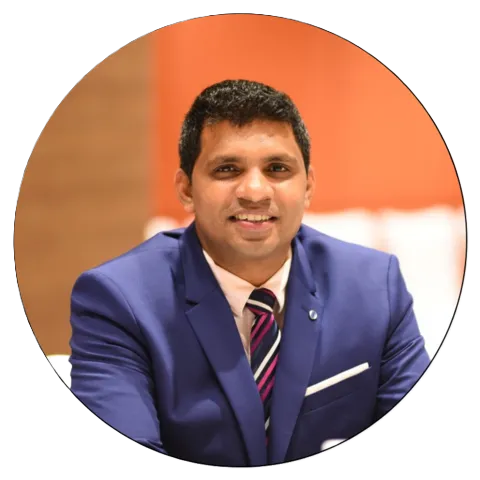
Shan (M. P. Shanavas) is a digital entrepreneur, business consultant, and ecosystem advisor working at the intersection of technology startups, investment structuring, and market-entry strategy.
He serves as Chief Consultant at Brand Consulting Corporation, where he advises founders, investors, and emerging companies on building investor-ready structures and navigating complex startup ecosystems across multiple jurisdictions.
He has been directly involved in guiding founders through Qatar-based startup structures, including companies operating under Web Summit–linked incentives, and brings hands-on experience navigating regulatory frameworks, funding programs, and ecosystem partnerships in Qatar.
Through his Bridge initiative, he works with founders, investors, and ecosystem participants to translate post-event momentum into long-term execution, positioning, and sustainable growth. He can be reached via email at shan@bccqa.com or on WhatsApp at📲https://wa.me/97466824638